
How Property Managers Use Virtual Assistants to Save Time and Manage More Properties
Property management involves much more than collecting rent and taking care of buildings. Property managers handle tenant questions, maintenance requests, applications, lease paperwork, inspections, vendors, owner updates, marketing, and many other daily tasks. As a property portfolio grows, these responsibilities can quickly become difficult to manage. A property manager may spend hours every day answering emails, following up with tenants, updating records, and scheduling contractors instead of focusing on the bigger needs of the business. This is where a property management virtual assistant can help.
A virtual assistant, or VA, is a remote professional who supports a business with administrative, customer service, coordination, and other operational tasks. For property managers, a VA can become an extension of the team and take care of many time-consuming tasks that do not require someone to be physically at the property.
What Does a Virtual Assistant Do for a Property Manager?
A property management virtual assistant can support many parts of the rental management process. The exact responsibilities depend on the property manager's needs, but common areas include:
- Tenant communication
- Leasing and rental applications
- Maintenance coordination
- Vendor communication
- Rent follow-ups
- Property marketing
- Administrative work
- Data entry and record keeping
- Owner communication
- Scheduling and calendar management
- Reporting and research
The goal is not necessarily to replace the property manager. Instead, the VA handles repetitive and administrative work so the property manager can spend more time on tasks that require experience, judgment, and an in-person presence.
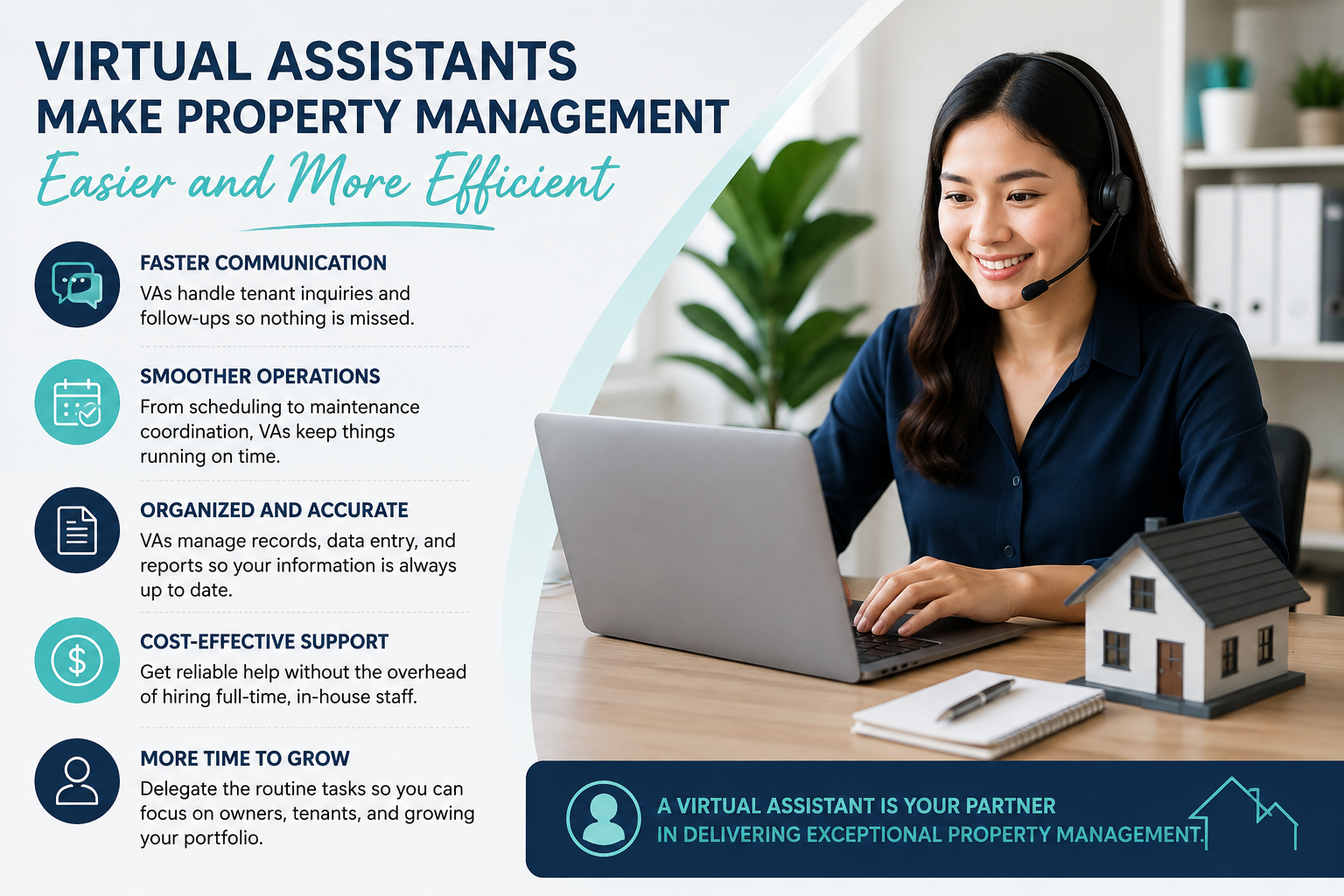
1. Managing Tenant Communication
Tenant communication is one of the biggest parts of property management. Tenants may send questions about rent, maintenance, move-in instructions, lease dates, utilities, or other property concerns. When a property manager handles every message personally, the inbox can become overwhelming. A virtual assistant can help manage this communication.
For example, a VA can:
- Monitor emails and property management inboxes
- Respond to routine tenant questions
- Send reminders and updates
- Follow up on unanswered messages
- Record tenant requests
- Forward urgent issues to the property manager
- Keep communication organized
The VA can also use prepared scripts and company guidelines to make sure responses are consistent. This does not mean the VA should make every decision for the property manager. More serious complaints, emergencies, legal concerns, or sensitive tenant situations can be escalated to the appropriate person. The result is simple: tenants receive faster responses while the property manager has fewer routine messages to handle.
2. Supporting the Leasing Process
Finding a tenant involves many small tasks before a lease is even signed. A property manager may need to respond to inquiries, answer questions about a rental, schedule showings, track applications, collect information, and follow up with prospects. A virtual assistant can support much of this process.
For example, the VA can:
- Respond to rental inquiries
- Follow up with interested prospects
- Schedule property tours
- Confirm appointments
- Update applicant information
- Organize application documents
- Track the status of applicants
- Send follow-up messages
- Update listings when needed
This can be especially useful when a property manager has several vacant units. Instead of spending hours checking whether a prospect responded, the property manager can have the VA manage the follow-up process and report important updates. A VA can also help keep the leasing pipeline organized. This makes it easier to see which prospects are new, which have scheduled tours, which submitted applications, and which need follow-up.
3. Coordinating Maintenance Requests
Maintenance is another area where virtual assistants can provide valuable support. When a tenant reports a broken appliance, plumbing issue, heating problem, or other repair, someone needs to collect the details and make sure the request moves forward. A VA can help coordinate this process.
The VA may:
- Receive the maintenance request.
- Record the issue in the property management system.
- Ask the tenant for additional information when needed.
- Contact the appropriate vendor.
- Schedule the repair.
- Update the tenant about the appointment.
- Follow up with the vendor.
- Update the work order after completion.
This gives the property manager better visibility without requiring them to personally coordinate every repair. However, a VA should know when to escalate an issue. Emergencies, safety concerns, major repairs, and decisions that require professional or local judgment should be handled by the property manager or the appropriate professional.
4. Following Up With Vendors and Contractors
Property managers often work with plumbers, electricians, cleaners, landscapers, handymen, inspectors, and other contractors. Managing these relationships can create a lot of administrative work. A virtual assistant can contact vendors, confirm appointments, request updates, and keep records organized. For example, if a contractor has not confirmed a scheduled repair, the VA can follow up instead of allowing the property manager to spend time making another call.
The VA can also maintain a vendor list with information such as:
- Company name
- Contact information
- Services provided
- Properties serviced
- Appointment history
- Work order status
- Notes from previous jobs
This creates a more organized system for managing contractors.
5. Helping With Rent Follow-Ups
Rent collection is an important part of property management, but the administrative follow-up can take considerable time. Depending on the property manager's processes and applicable laws, a virtual assistant may help monitor payment information and send approved reminders or follow-up messages.
For example, a VA can:
- Check payment status in the property management system
- Identify accounts that need follow-up
- Send approved payment reminders
- Record communication
- Follow up on previously sent messages
- Escalate unresolved issues
The important point is that the VA should follow the property manager's established procedures. A VA should not independently make legal decisions, change fees, or take actions that require professional or legal authority. Instead, the assistant supports the process and keeps the property manager informed.
6. Managing Property Listings and Marketing
Vacant properties need attention. A rental that sits vacant for too long can reduce income, so property managers need to keep listings accurate and follow up with potential tenants.
A virtual assistant can support the marketing process by:
- Updating rental listings
- Checking listing information
- Posting properties on approved platforms
- Responding to inquiries
- Scheduling tours
- Following up with prospects
- Organizing property photos
- Tracking listing performance
- Researching competing rental properties
A VA can also help compare competing listings by collecting information such as rental prices, bedroom and bathroom counts, amenities, and advertised features. The property manager can then use this information when deciding whether a rental needs a pricing or marketing adjustment.
7. Keeping Property Records Organized
Property management creates a large amount of information. There are tenant records, lease dates, maintenance records, invoices, vendor information, inspection documents, property details, and many other files. When records are not updated regularly, small mistakes can become bigger problems. A virtual assistant can help maintain these records.
Typical tasks may include:
- Updating tenant information
- Entering property data
- Uploading documents
- Organizing digital files
- Updating spreadsheets
- Recording maintenance activity
- Tracking lease dates
- Updating CRM or property management software
- Preparing basic reports
Good record keeping may not feel like a high-value task, but it is important for keeping the operation organized.
8. Supporting Owner Communication
Property managers also need to communicate with property owners. Owners may ask about vacancies, maintenance, tenant activity, expenses, or the general performance of their property. A VA can help prepare information for these conversations.
For example, the assistant can collect:
- Vacancy information
- Maintenance updates
- Recent property activity
- Vendor updates
- Rental inquiries
- Basic financial information
- Outstanding tasks
The property manager can then review the information and communicate with the owner. This saves time while still keeping the property manager involved in important decisions.
9. Scheduling Inspections, Tours, and Appointments
Property management involves a lot of scheduling. There may be tenant tours, inspections, maintenance appointments, vendor visits, move-ins, move-outs, and owner meetings. A virtual assistant can manage much of the scheduling work. The VA can coordinate calendars, confirm appointments, send reminders, reschedule canceled appointments, and make sure the correct people have the necessary information. This is particularly useful for property managers with multiple properties because a missed appointment can create delays for several people.
10. Helping With Move-Ins and Move-Outs
Move-ins and move-outs involve many steps. A virtual assistant can help create checklists and make sure each step is tracked.
For a move-in, the VA may help with:
- Sending move-in instructions
- Confirming required documents
- Scheduling appointments
- Tracking utility information
- Organizing keys or access instructions
- Updating tenant records
For a move-out, the VA can help with:
- Sending move-out reminders
- Tracking required notices
- Scheduling inspections
- Coordinating cleaning or repairs
- Updating property status
- Organizing documents
The VA supports the process while the property manager or appropriate staff handle tasks that require physical inspection or professional judgment.
11. Research and Reporting
Property managers also need information to make good decisions. A virtual assistant can perform basic research and organize the results.
For example, a VA can research:
- Rental prices in a specific market
- Competing properties
- Local vendors
- Property services
- Rental listing performance
- Tenant communication data
- Lead sources
The assistant can place the information into a spreadsheet or report so the property manager can review it quickly. Instead of spending an afternoon collecting data, the property manager receives an organized summary that can be used for decision-making.

Why Are Property Managers Using Virtual Assistants?
The main benefit is not simply having another person to complete tasks. It is about creating a better division of work. Property managers need to focus on responsibilities that require management experience, problem-solving, relationships, negotiations, and local knowledge. At the same time, many daily tasks are repetitive and follow a clear process. These are often good tasks to delegate. A VA can handle the administrative workload while the property manager focuses on areas where their experience has the most value. This can also help a property management company grow without immediately building a large in-house administrative team.
What Should Property Managers Keep In-House?
Not every property management responsibility should be delegated to a virtual assistant. Property managers should carefully define which tasks a VA can handle and which tasks require a licensed professional, local employee, or manager. Depending on the state and situation, tasks involving legal decisions, lease enforcement, fair housing compliance, handling certain funds, final tenant decisions, inspections, emergencies, or other regulated activities may require qualified personnel. The exact rules can vary by state and by the property manager's business structure. The safest approach is to create clear procedures before assigning responsibilities to a VA.
A good system should explain:
- What the VA can do independently
- What requires approval
- What must be escalated
- Who handles emergencies
- What information is confidential
- Which software and systems the VA should use
This gives the VA clear boundaries and helps protect the property management operation.
How to Make a Property Management VA Successful
Hiring a virtual assistant is only the first step. The VA needs a clear system to work effectively. Start by identifying the tasks that consume the most time. Instead of trying to delegate everything immediately, begin with a few repeatable processes. Create simple instructions for each task. Screenshots, checklists, templates, and short videos can make training easier. It is also important to set clear expectations for communication. Decide when the VA should provide updates, how quickly messages should be answered, and which situations require immediate escalation. Property managers should also use the software already used by the business whenever possible. A VA who can work inside the company's property management platform, CRM, email, calendar, and communication tools can become much more useful than someone who works separately from the main system. Most importantly, delegation should have a purpose. The goal is not to give a VA random tasks simply because they are available. The goal is to remove repetitive work that prevents the property manager from focusing on more important responsibilities.
The Future of Property Management Support
Property management continues to become more technology-driven. Online rental listings, digital applications, property management software, tenant portals, electronic communication, and remote collaboration have made it possible for more administrative work to happen from almost anywhere. This creates an opportunity for property managers to build flexible teams. A virtual assistant can become part of that team by handling the work behind the scenes. For a growing property management company, the question may not be whether every task can be done remotely. Instead, it is about identifying which tasks should be delegated so the property manager can spend more time on the work that truly requires their attention.
Get More From Your Property Management Team With Virtual Staff Labs
For property managers, the right virtual assistant can be more than someone who answers emails or enters data. With the right training and systems, a VA can become a dependable part of the daily operation.
Virtual Staff Labs helps businesses connect with trained virtual assistants for administrative, customer service, real estate, lead generation, and other support roles. The company handles candidate screening, matching, onboarding, and ongoing support, helping businesses find remote talent that fits their needs. For a property manager, this can be a practical way to start delegating tasks such as tenant follow-ups, listing support, scheduling, administrative work, and other repeatable processes. You do not have to delegate everything at once. Start with the tasks that take the most time, create a clear process, and let your virtual assistant gradually become part of your workflow. The result can be a more organized operation, faster follow-up, and more time for the property manager to focus on growing the business.
If your property management business is spending too much time on administrative work, a virtual assistant may be worth considering as part of your next stage of growth.